New Energy and Industrial Technology Development Organization (NEDO)
Hydrogen Gas Turbines Aren’t Waiting for Hydrogen Alone

The challenge for hydrogen gas turbines is no longer whether they can burn only hydrogen, but whether they can continue using hydrogen—with its high energy losses—as a flexible power source for power plants. New Energy and Industrial Technology Development Organization (NEDO), Kawasaki Heavy Industries, and RWE have opened a 30MW-class facility in Germany and moved a turbine that can switch fuels from 0% to 100% hydrogen into the operating phase. If the conditions are right, some of the electricity delivered to homes and factories on windless evenings could come from hydrogen stored on windy days.
On windy or sunny days, wind and solar power can produce more electricity than can be used at the time, leaving no choice but to curtail their output. The options for converting that electricity back on a large scale later are limited. Natural-gas-fired power plants, meanwhile, can make up for power shortages, but burning their fuel releases CO2. The more renewable energy grows, the more pressing the question of what to do with surplus electricity becomes.
The Difficulty of Turning Hydrogen Back Into Electricity
Hydrogen does not produce CO2 when burned. However, depending on how it is made, its production can cause significant emissions. The process of using electricity to split water into hydrogen, storing it, and then burning it again to generate electricity involves greater energy losses than using the electricity directly.
Gas turbines are power sources that can change their output quickly when wind and solar generation fluctuates. But hydrogen burns at a different speed from natural gas. With existing turbines, the challenges include stabilizing combustion, limiting its effects on components, and reducing nitrogen oxides (NOx).
Large Turbine Switches Fuels
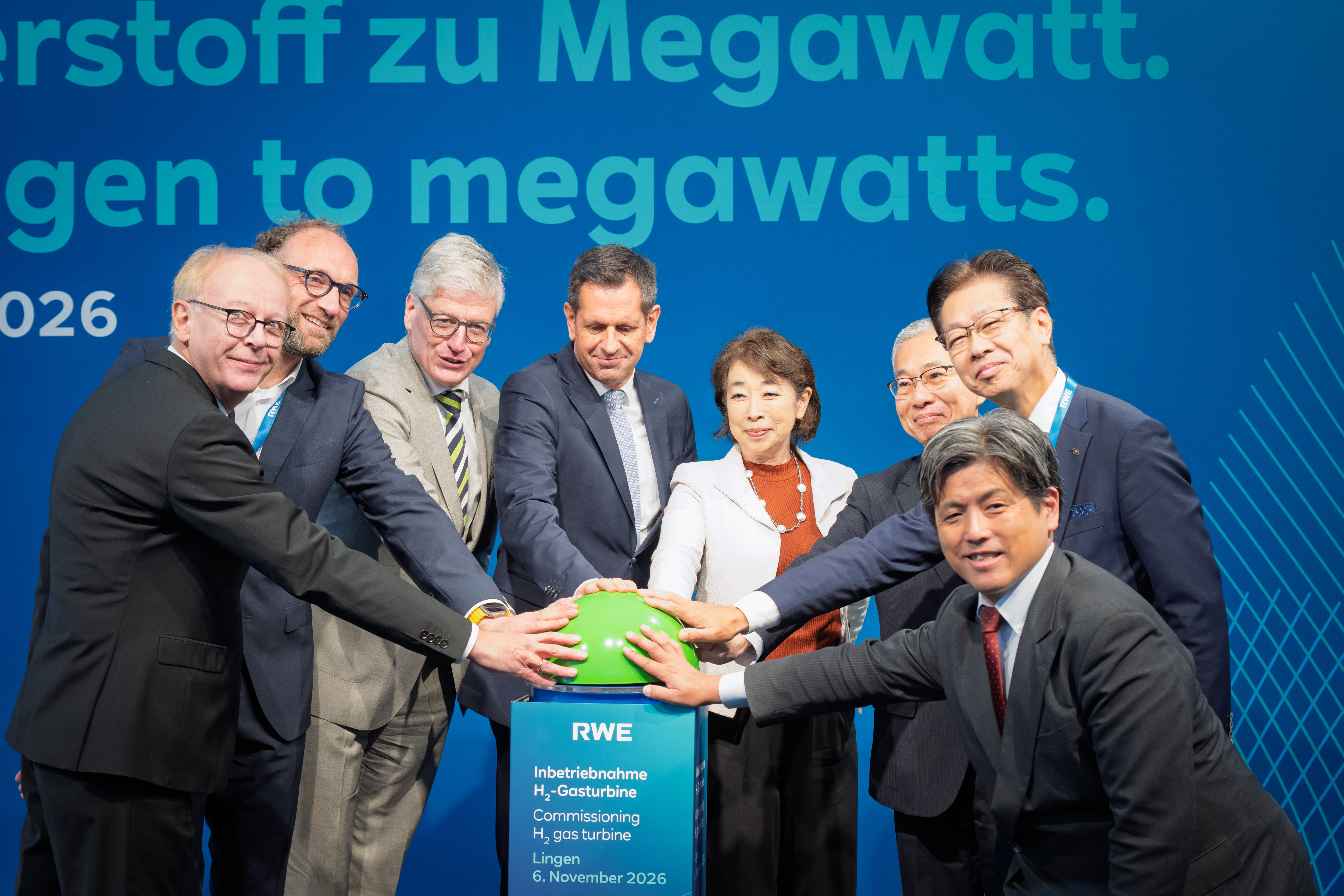
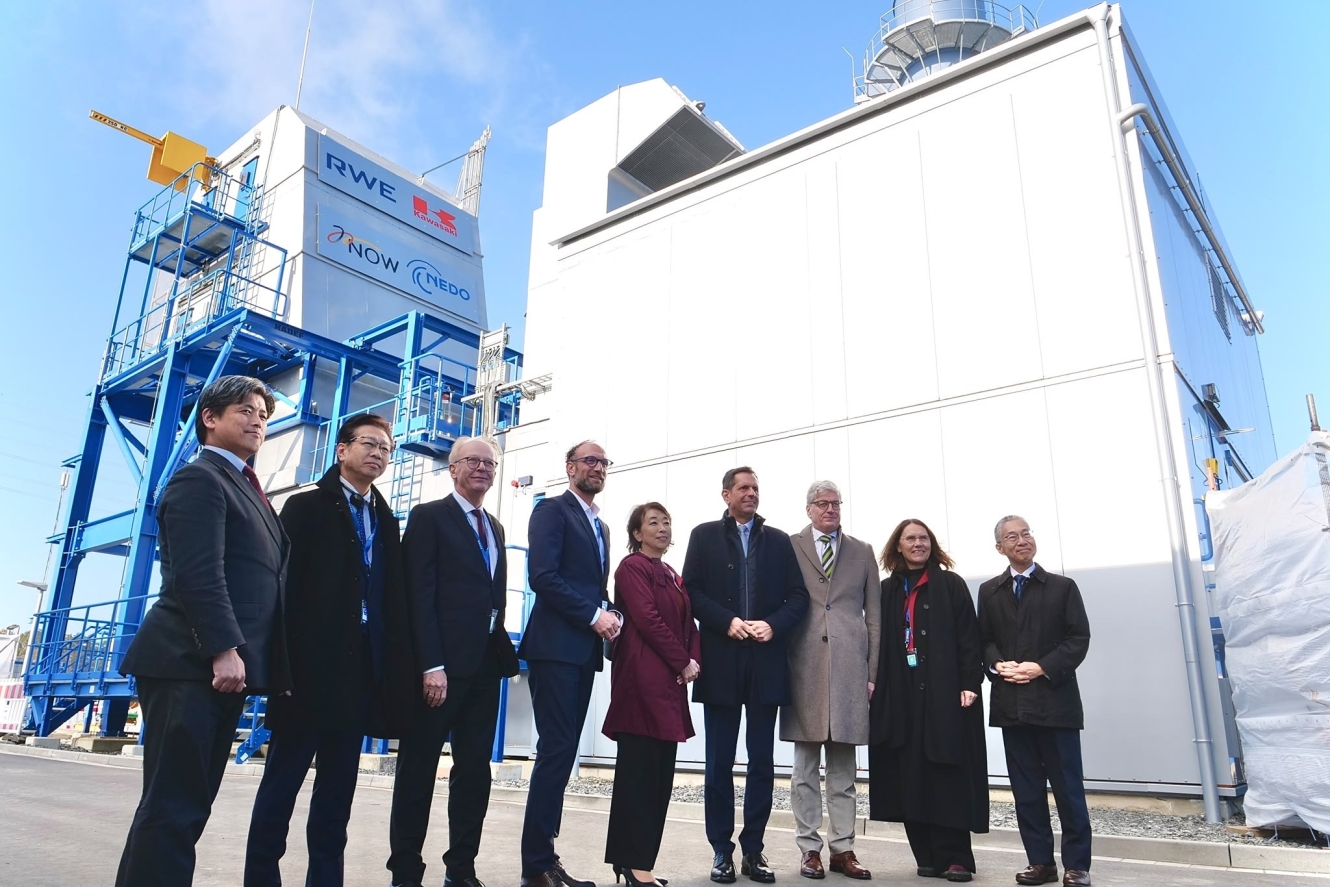
On November 6, 2026, New Energy and Industrial Technology Development Organization (NEDO), Kawasaki Heavy Industries, and RWE held an opening ceremony for a power-generation facility at a hydrogen park inside the Emsland power plant in Lingen, Germany. The facility uses Kawasaki Heavy Industries’ 30MW-class gas turbine, the “L30A.” According to Kawasaki Heavy Industries, power generation using hydrogen mixed with natural gas and power generation using hydrogen alone with a 30MW-class turbine are both a first in Europe.
The turbine can switch the hydrogen combustion share from 0% to 100%. It is designed to shift gradually from natural gas to hydrogen in line with the amount of fuel available. The combustor uses a system that injects water or steam to suppress NOx.
The question of whether hydrogen can be burned in a large machine has now, for the time being, entered the stage of operating the equipment. The next question is whether the facility can use CO2-free hydrogen delivered from RWE’s wind-power facilities together with natural gas while meeting required limits for nitrogen oxide (NOx) and carbon monoxide (CO) emissions, stable-combustion requirements, durability standards, and operational requirements.
Electricity Delivered on Windless Evenings
If the demonstration meets the required conditions, surplus electricity on windy days could be converted into hydrogen and used as a flexible power source on windless evenings. Some of the electricity delivered to homes and factories in Lower Saxony could come from hydrogen stored earlier. There may also be a way to avoid wasting electricity and to generate power without replacing the generating equipment itself each time the fuel changes.
However, the losses involved in converting electricity into hydrogen and burning it again remain. Whether hydrogen can be supplied in sufficient quantities and with adequate stability, and whether its price can support a viable business, will also be decisive. Only when hydrogen supply, storage, and transport are connected, and the turbine meets requirements for emissions and durability, will this facility become a way to absorb surplus electricity.