New Energy and Industrial Technology Development Organization (NEDO)
Naphtha cracker trial replaces 85% of heat with ammonia while keeping NOx unchanged

The main heat in a naphtha cracker was supplied using 100% ammonia, and a trial successfully replaced 85% of the furnace’s total heat input with ammonia. NOx levels were the same as those of existing equipment, but stable operation with wall burners and commercial-scale furnaces, as well as the supply of low-carbon ammonia, remain challenges.
A naphtha cracker is a furnace used at petrochemical complexes to produce ethylene and propylene. While it produces raw materials for plastics and synthetic fibers, it has traditionally burned the off-gas produced as a byproduct to generate the heat needed to crack naphtha at high temperatures, releasing combustion-derived CO2.
Replacing it with ammonia would produce no carbon-derived CO2 during combustion. However, ammonia burns more slowly and contains nitrogen, so combustion can also generate NOx (nitrogen oxides), depending on the conditions. Replacing the fuel while maintaining the furnace temperature and not increasing emissions was difficult.
The challenges of using ammonia as a fuel
A naphtha cracker breaks down naphtha at high temperatures to produce ethylene, propylene and other materials used to make plastics and synthetic fibers. Ammonia does not emit carbon-derived CO2 during combustion, but because it contains nitrogen, it can generate NOx depending on combustion conditions. In addition, emissions from production remain if the hydrogen, electricity and heat used to make the ammonia are not low-carbon. Emissions associated with using fossil-derived naphtha as a feedstock also remain.
Supplying most of the heat with ammonia
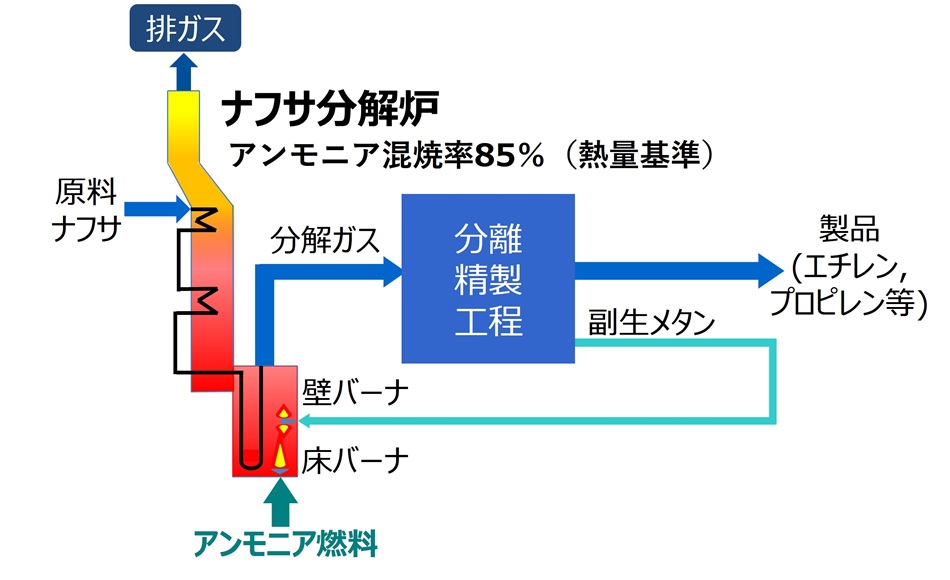
The New Energy and Industrial Technology Development Organization (NEDO) and four companies developed burners for the floor and walls of a naphtha cracker. In the test furnace, the floor burners responsible for the main heat were fired using 100% ammonia. The wall burners, meanwhile, used 100% methane, the off-gas from a naphtha cracker.
Even so, ammonia replaced up to 85% of the furnace’s total heat input. NOx emissions were at the same level as those from existing equipment. The parties behind the announcement say that, as of August 2026, this is a world-leading co-firing rate for the operation of a test furnace targeting a naphtha cracker. In other words, the trial showed that ammonia can replace the main heat source of the cracker. However, methane is still used in the wall burners.
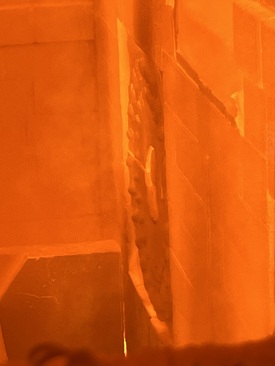
Before the furnaces at factories change
If the technology can operate stably at commercial scale and low-carbon ammonia can be procured continuously, furnaces at the Chiba petrochemical complex that produce materials for shampoo bottles and clothing fibers could be heated with ammonia. This could significantly reduce combustion-derived CO2 released from smokestacks. It could also provide an option that avoids completely rebuilding existing crackers.
That vision comes with conditions. If the hydrogen, electricity and heat used to make ammonia are not low-carbon, emissions from its production remain. Emissions associated with using fossil-derived naphtha as a feedstock also remain. NEDO and the four companies say they will next apply ammonia to the wall burners and aim to achieve 100% ammonia-only firing across the entire furnace, as well as demonstrate the technology in a commercial-scale furnace. Further reducing combustion-derived CO2 will require wall burners, NOx management, continuous operation and ammonia supplies to all be in place.